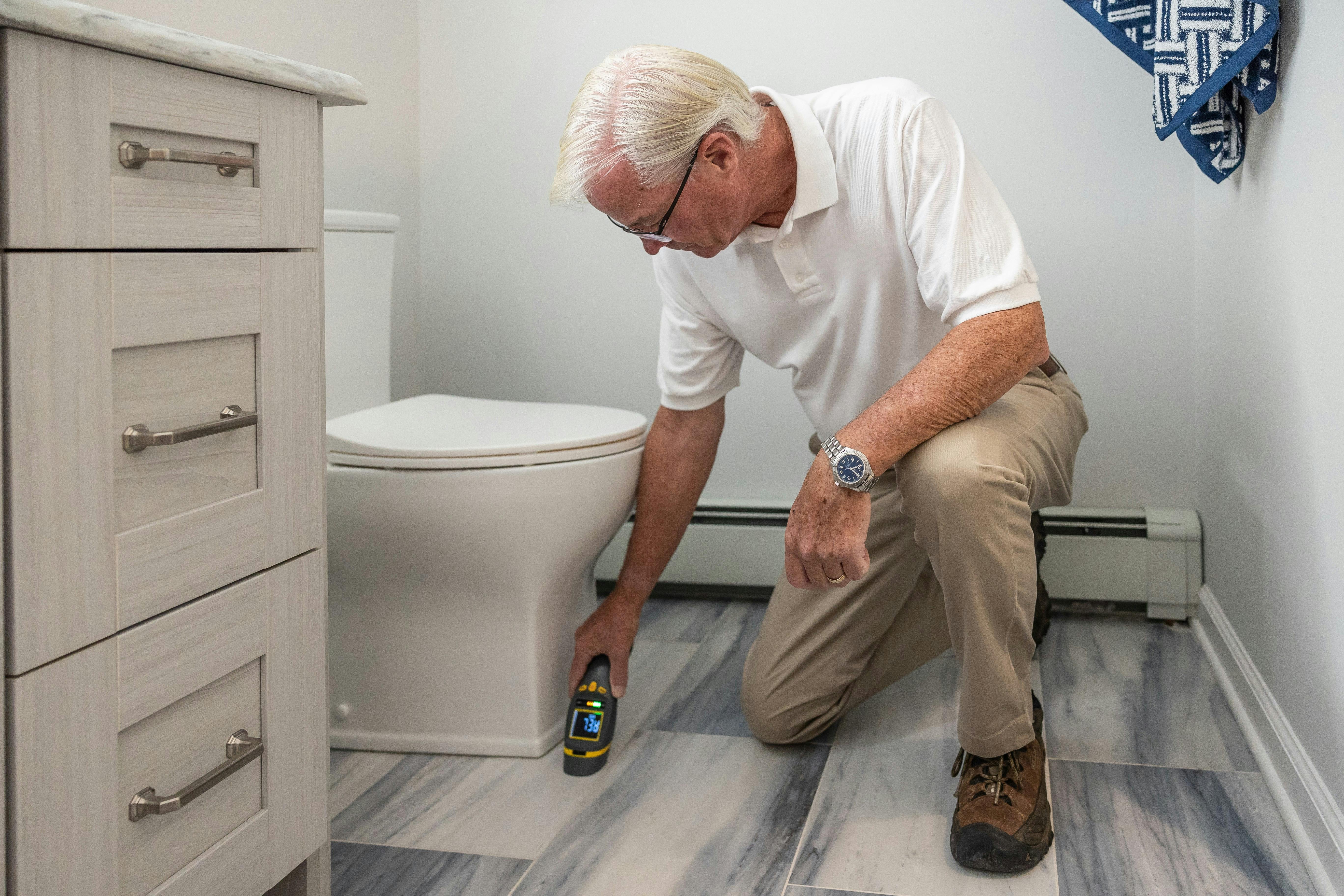
Water ingress — water getting into a building where it shouldn’t — is one of the most common and expensive defects in new Australian homes, and it almost always starts as something small: a hairline gap in a shower seal, a poorly flashed window, a crack in the render. Because it’s usually classed as a structural or major defect, water ingress carries longer warranty protection than cosmetic issues, but only if you catch it and report it. A leaky-building inspection is about finding the early signs before hidden damage — rot, mould, and movement — sets in.
Where water gets in
In a new build, water ingress almost always traces back to one of a handful of failure points:
- Wet-area waterproofing — the membrane under tiles in showers, bathrooms, and laundries. Waterproofing defects are a leading cause of new-home leaks, and the work must comply with AS 3740 (waterproofing of domestic wet areas).
- Roof, gutters, and flashings — missing or poorly laid flashings at valleys, penetrations, and junctions; blocked or badly graded gutters. See roof defects in new homes.
- Windows and doors — gaps in sealing, missing sill flashings, or poor installation that lets water track in around the frame.
- External walls and render — cracks in render or cladding, or missing weep holes in brickwork that trap moisture in the cavity.
- Balconies, decks, and external tiling — external waterproofing (covered by AS 4654) that fails or drains the wrong way.
- Below-ground and slab — rising damp or poor site drainage pushing water toward the building.
The warning signs
Water ingress hides. By the time you see a stain, the leak has usually been active for a while. Look for:
- Water stains or discolouration on ceilings, cornices, and walls — especially below wet areas above
- Bubbling, blistering, or peeling paint
- Condensation, damp patches, or mould in corners, cupboards, and around windows
- A musty smell, particularly in bathrooms, robes, and enclosed spaces
- Efflorescence — white powdery salt deposits — on brick or render
- Swelling or lifting of skirting, flooring, or door frames
- Pooling water in a shower base or on a bathroom floor that doesn’t drain (a falls problem)
- Damp or drummy tiles, or grout and silicone that’s cracked or missing at wet junctions
How to inspect for water ingress
You can do a lot with a careful eye, though a professional with a moisture meter will find what you can’t:
- Test the wet areas. Run the shower and taps, then check for pooling, slow drainage, and any dampness appearing on the other side of the wall or on the ceiling below.
- Check after rain. The best time to find a roof, window, or render leak is during or just after heavy rain. Look in the roof space with a torch for daylight, water marks, or wet insulation.
- Inspect the roof space. Sarking, insulation, and framing should be dry. Water stains on timber or damp insulation point to a roof or flashing failure.
- Look at the junctions. Most leaks happen where two things meet — wall to floor, window to wall, roof to penetration. Check the seals and flashings at every junction.
- Follow the water. A stain on a ceiling is rarely directly below the leak; water travels along framing. Trace it back to the source.
Because water ingress is so often hidden and so costly, a licensed building inspector — especially one with thermal imaging or a moisture meter — is a worthwhile investment on a new build.
Why water ingress is treated seriously
Left alone, a small leak becomes an expensive structural problem. Persistent moisture rots timber framing, corrodes fixings, feeds mould that affects health, and can cause movement and cracking as materials swell and shrink. That’s why building law and warranty schemes treat water penetration as a major or structural defect in most states — with a warranty window of around six years, rather than the short period that applies to cosmetic issues.
That longer protection only helps if you act. As soon as you find a sign of water ingress:
- Photograph and date it, and note exactly where it is.
- Report it to your builder in writing during the defects liability period, and keep proof.
- Don’t paint over it or patch it before it’s assessed — you’ll hide the evidence and the cause.
- Escalate if ignored. If the builder won’t act, your state’s building complaint process and statutory warranty are there for exactly this.
What water ingress costs if you ignore it
The reason to act on a small leak now is what it becomes later. Moisture that keeps getting in doesn’t stay a stain:
- Timber rot and structural damage — sustained moisture rots framing and subfloors and corrodes fixings, turning a sealing job into a rebuild.
- Mould and health effects — persistent damp feeds mould that can affect respiratory health, and remediation means opening up walls and floors.
- Movement and cracking — materials that repeatedly swell and dry out move, cracking plaster, tiles, and render.
- Falling value and stalled sales — evidence of water ingress and mould is a red flag for buyers and building inspectors alike.
A shower re-seal or a re-flashed window is cheap. The rot, mould remediation, and re-tiling that follow a year of ignored water ingress are not — which is why catching and documenting it early is one of the highest-value things you can do on a new home.
Buying an established home? Check for past water ingress
Water ingress isn’t only a new-build issue. If you’re buying an existing home, treat the wet areas, ceilings, roof space, and window junctions as priority inspection zones, and be alert to signs of a previous leak that’s been painted over — fresh paint in one patch, a replaced section of ceiling, or a lingering musty smell. A building and pest inspection with a moisture meter is the standard safeguard, and it’s worth every dollar on a purchase this size.
Key Takeaways
- Water ingress is one of the most common and costly defects in new Australian homes, and it usually starts small — a failed seal, a poor flashing, a crack in the render.
- The usual sources are wet-area waterproofing (AS 3740), roof and flashings, windows, render and brickwork, balconies and external tiling (AS 4654), and site drainage.
- Warning signs include ceiling and wall stains, bubbling paint, mould, musty smells, efflorescence, lifting skirting, and water that pools instead of draining.
- Inspect by testing wet areas, checking the roof space and junctions after rain, and tracing stains back to the source; a moisture meter or an inspector finds hidden leaks.
- Water penetration is generally a structural/major defect with a warranty window of around six years — but only if you document and report it early.
- Photograph and date any sign of water ingress, report it to the builder in writing, don’t cover it up before assessment, and escalate through your state’s complaint process if it’s ignored.
Free to download
Stop losing track of defects.
Checka helps you capture issues, stay organised, and arrive at handover with a complete record of your build.